Chapter 8. Static
'명품 C++Programming - 황기태' 6장 학습 내용
1절. Static과 Non-Static
2절. Static
1절. Static과 Non-Static
static 멤버와 non-static 멤버
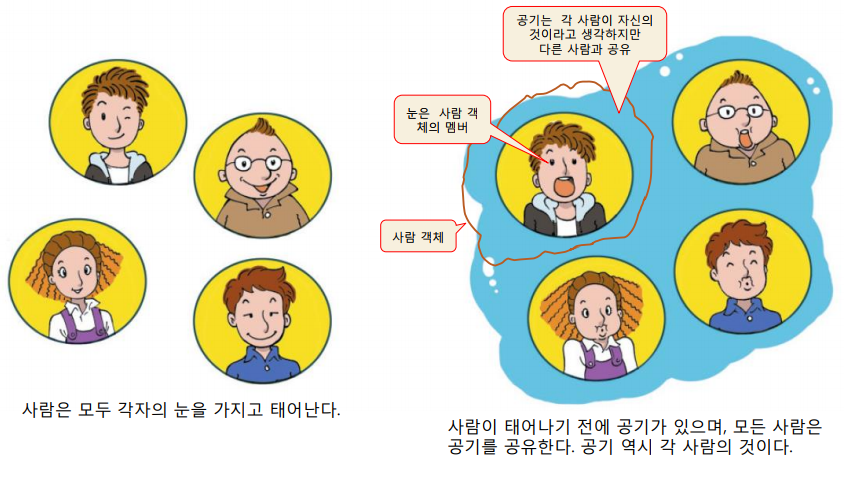
static 멤버와 non-static 멤버의 특성
- static
- 변수와 함수에 대한 기억 부류의 한 종류
- 생명 주기 - 프로그램이 시작될 때 생성, 프로그램 종료 시 소멸
- 사용 범위 - 선언된 범위, 접근 지정에 따름
- 클래스의 멤버
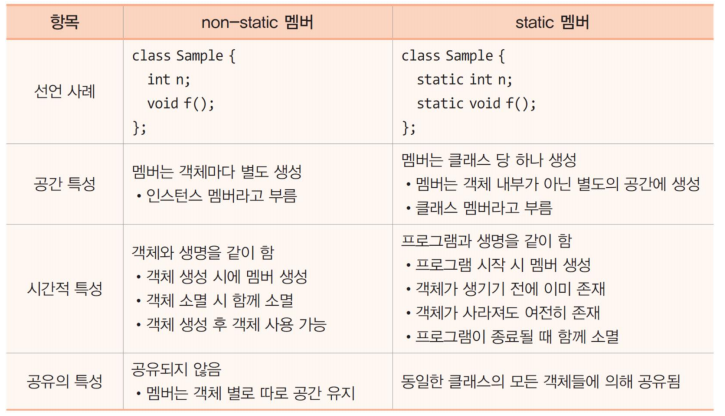
- static 멤버
- 프로그램이 시작할 때 생성
- 클래스 당 하나만 생성, 클래스 멤버라고 불림
- 클래스의 모든 객체들이 공유하는 멤버
- non-static 멤버
- 객체가 생성될 때 함께 생성
- 객체마다 객체 내에 생성
- 인스턴스 멤버라고 불림
Static 멤버와 Non-static 멤버의 관계
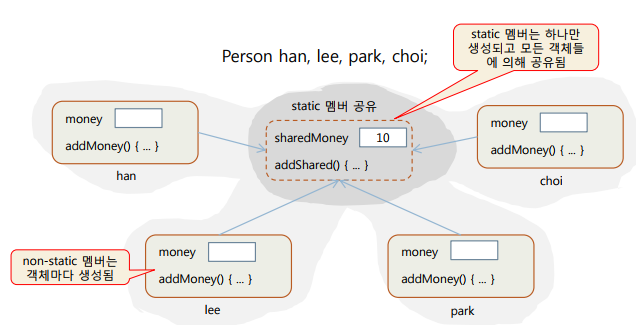
- han, lee, park, choi 등 4개의 Person 객체 생성
- sharedMoney와 addShared() 함수는 하나만 생성되고 4개의 객체들에 의해 공유
- sharedMoney와 addShared() 함수는 han, lee, park, shoi 객체들의 멤버
Static 멤버와 Non-Static 멤버 비교
2절. Static
static 멤버 선언
- 멤버의 static 선언
class Person{
public:
  double money;                    // 개인 소유의 돈
  void addMoney(int money){
    this->money += money;
  }

  // 위는 non-static 멤버 선언에 대한 코드

  static int sharedMoney;          // static 멤버 변수 선언
  static void addShared(int n){    // static 멤버 함수 선언
    sharedMoney += n;
  }
};

int Person::sharedMoney = 10;      // sharedMoney를 10으로 초기화
// static 변수 공간 할당
// 프로그램 전역 공간에 선언
-
static 멤버 변수 생성
-
전역 변수로 생성
-
전체 프로그램 내에 한 번만 생성
-
static 멤버 변수에 대한 외부 선언이 없다면 아래와 같은 오류가 발생

static 멤버 사용 : 객체의 멤버로 접근
- static 멤버는 객체 이름이나 객체 포인터로 접근
- 보통 멤버처럼 접근 가능
- Person 타입의 객체 lee와 포인터 p를 이용하여 static 멤버를 접근하는 예시
Person lee;
lee.sharedMoney = 500;      // obj.staticMember 방식

Person *p;
p = &lee;
p->addShared(200);          // objpointer->staticMember 방식
-
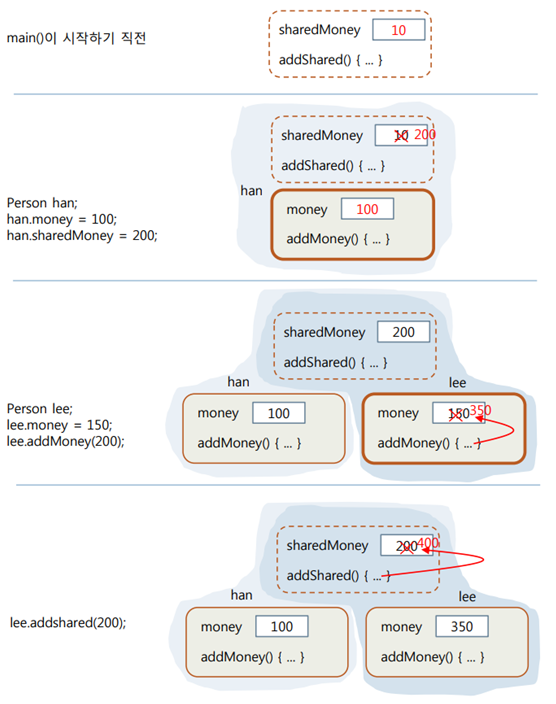
그림으로 먼저 보기
-
예제 1. Static 멤버 사용 예제
SourceCodeChecking -
han와 lee의 money는 각각 100, 350으로 값이 다르지만 han와 lee의 sharedMoney는 공통 400으로 같음
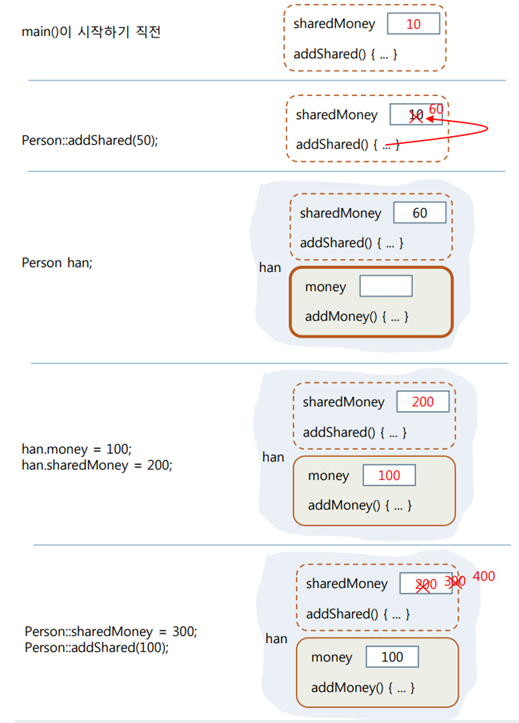
static 멤버 사용 : 클래스명과 범위 지정 연산자 (::)로 접근
- 클래스 이름과 범위 지정 연산자 (::)로 접근 가능
- static 멤버는 클래스마다 오직 한 개만 생성되기 때문

- non-static 멤버는 클래스 이름을 접근 불가
Person::money = 100;        // 컴파일 오류 : non-static 멤버는 클래스 명으로 접근 불가
Person::addMoney(200);      // 컴파일 오류 : non-static 멤버는 클래스 명으로 접근 불가
-
그림으로 먼저 보기
-
예제 2. Static 멤버 클래스 접근 예제
SourceCodeChecking
static 활용
- static의 주요 활용
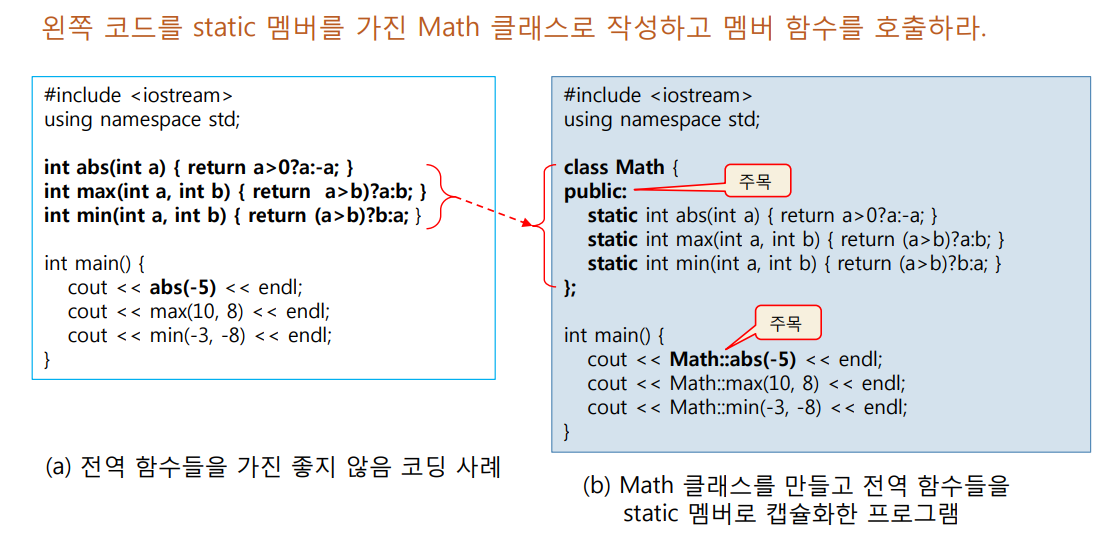
- 전역 변수나 전역 함수를 클래스에 캡슐화
- 전역 변수나 전역 함수를 가능한 사용하지 않도록
- 전역 변수나 전역 함수를 static으로 선언하여 클래스 멤버로 선언
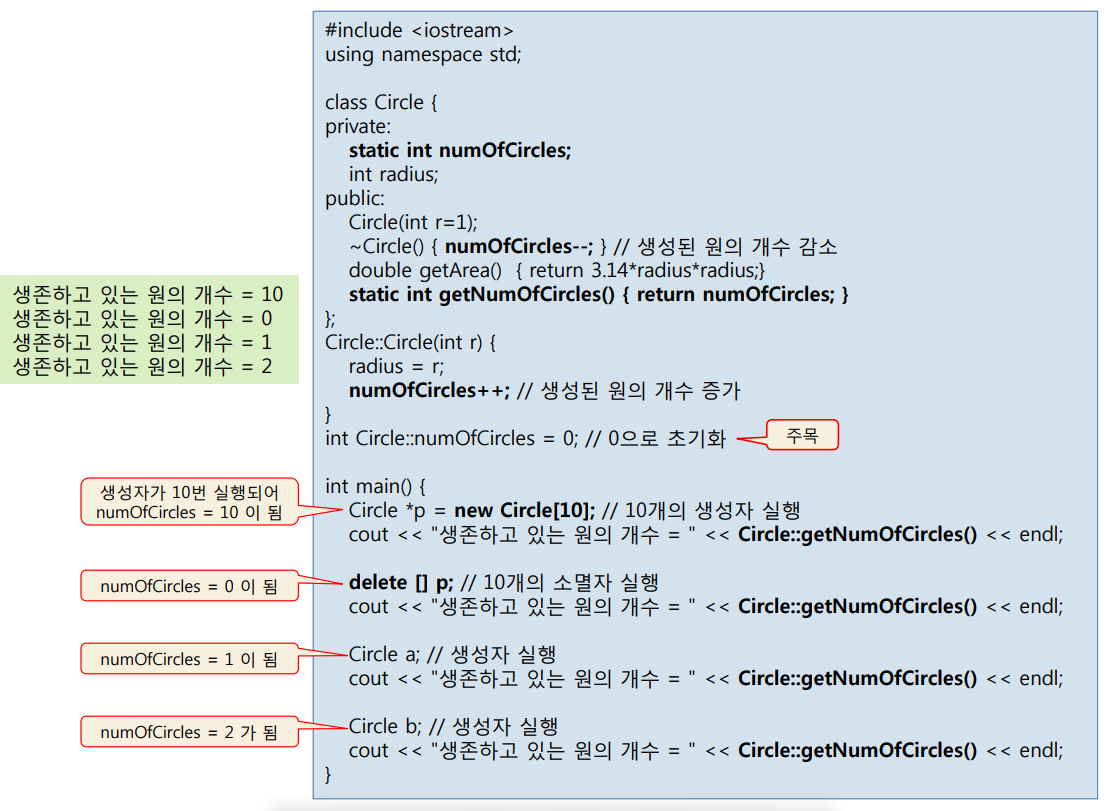
- 객체 사이에 공유 변수를 만들고자 할 때
- static 멤버를 선언하여 모든 객체들이 공유
특정한 목적을 가진 static 멤버
-
그림으로 먼저 보기
-
예제 3. static 멤버를 가진 Math 클래스 예제
SourceCodeChecking -
그림으로 먼저 보기
-
예제 4. 공유의 목적으로 static 멤버를 사용하는 예제
SourceCodeChecking
static 멤버 함수는 static 멤버만 접근 가능
- static 멤버 함수가 접근할 수 있는 것
- static 멤버 함수
- static 멤버 변수
- 함수 내의 지역 변수
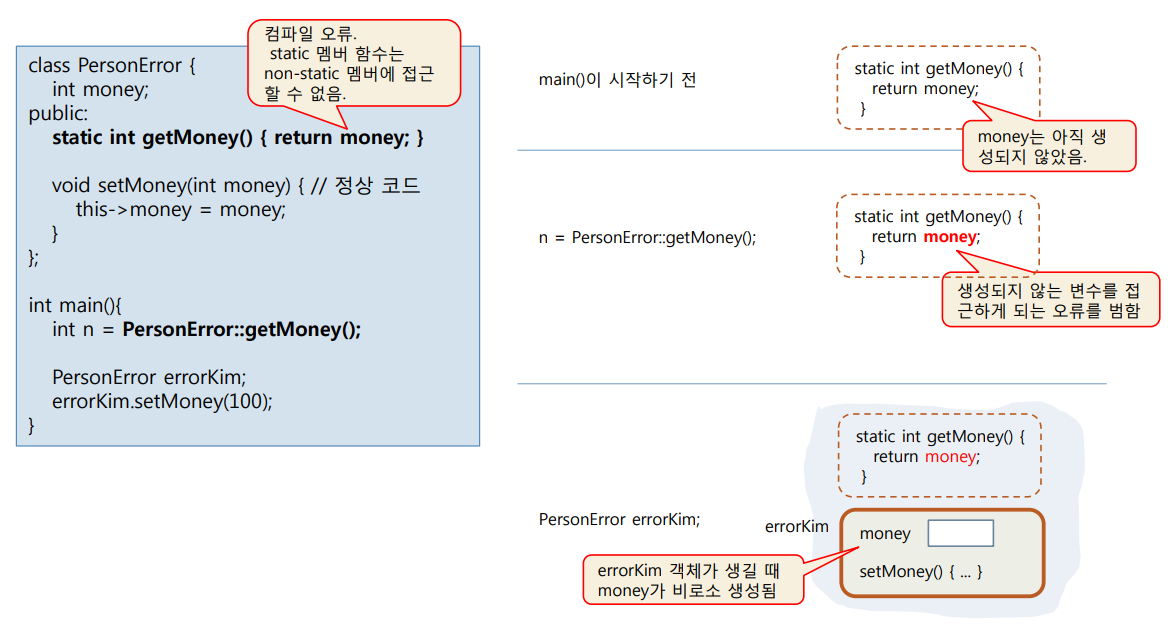
- static 멤버 함수는 non-static 멤버에 접근 불가
- 객체가 생성되지 않은 시점에서 static 멤버 함수가 호출될 수 있기 때문
static 멤버 함수의 오류
- static 멤버 함수 getMoney()가 non-static 멤버 변수 money를 접근하는 오류
non-static 멤버 함수는 static에 접근 가능
class Person{
public:
 double money;             // 개인 돈
 static int sharedMoney;   // 공유 돈

// ...

 int total() {
  return money + sharedMoney;
}
// non-static 함수는 non-static이나 static 멤버에 모두 접근 가능
};
static 멤버 함수의 this
- static 멤버 함수는 객체가 생기기 전부터 호출 가능
- static 멤버 함수에서 this 사용 불가